Monday, March 21, 2016

Spring Break Adventures (Crater Lakes, Cloud Forests, and la Playa!)


Quilotoa
After an extremely busy week full of tests, projects, and papers, seven friends from my program and I left last Friday evening for spring break.  We spent the last 10 days travelling all over Ecuador in the mountains, cities, and the coast. 

We began our trip in Quilotoa, a beautiful crater lake found to the west of the Andes Mountains.  It is a magnificent turquoise lake that was formed around 800 years ago after a volcano erupted. Surrounding the lake are beautiful hills and valleys of upper montane cloud forest. We started off at the top of the lake early Saturday morning and we hiked down from the top to actually get to the lake. Once we reached the bottom, we went kayaking all around the gorgeous and very cold lake, which was incredible! After the kayaking there was only one direction for us to go and that was back up to the top. Rather than taking alpacas, we decided that we would get some exercise and hiked up the super steep path. The 12,800 feet in elevation definitely provided an extra challenge and we definitely got a workout!
Kayaking in the lake

The view from the crater lake
That was only the beginning of a day full of amazing hiking. Once at the top, we continued to walk around the entire lake (it definitely gives Lake Calhoun a run for its money) and at times we were actually walking through clouds. We then proceeded to walk back to our hostel through the neighboring towns. Of course when we left in the morning the owner of the hostel told us it was very close and easy to get back to the hostel, but he must have a different definition of close than we do, but 15 miles later, two very steep climbs, and a lot of chocolate, we made it back! The following day we hiked around the cloud forest area again, which was full of beautiful valleys and lookouts.


Cuenca
We then left Quilotoa and took a bus to Cuenca, a city in the highlands of Ecuador and a very popular American ex-pat town. We stayed in the center of the city, which is listed as a UNESCO World Heritage Trust site due to its many historical buildings. We spent the first day there, taking it a little easy, and walked around the city and appreciated the stunning architecture of the many old buildings and churches.  In the afternoon we visited the Museum of Aboriginal Cultures of Ecuador, which we set up because my host mom’s cousin owns the museum. The minute we walked in, she greeted me with a hug and a kiss and told her coworkers that we were family!  The museum was also extremely fascinating and well put together. I learned that Ecuador’s aborigines are made up of 11 different cultures, and the Incas actually only ruled Ecuador for 80 years!
Artifacts from the museum

Polylepus Forest
Cajas
Cajas
After taking it relatively easy for one day, we were ready to get back to hiking. We travelled to Cajas National Park, which is located in the Páramo around 13,600 feet in elevation and close to Cuenca.  It did not take long for our adventures to start because 30 minutes into the ride the bus broke down! We decided we were close enough to hike and we started our walk a little early and paved our own unique road into the park.  Our surroundings were absolutely beautiful and using a map (from my phone, it’s amazing what iphones can do these days) we hiked through the jagged landscape made up of steep hills and valleys.  It was raining and a little chilly throughout the day, but all around us was lush and gorgeous vegetation and beautiful polylepus trees, the only trees that grow at that high of elevation. It was another great and long day of hiking and aside from getting lost a few times we all made it out!


Landslide on the highway


The next day we continued on our journey to la costa- the coast of Ecuador! We did not leave our bus troubles behind, however, because about half way there, our bus stopped again. This time it was not a broken bus, but rather a landslide that had completely blocked the road. We waited for an hour as construction workers hurriedly made a new road through the dirt and eventually our bus made it around the landslide. After a long day of travelling, and some help from some Canadians we met along the way, we arrived on the coast where the temperature was at least 20 degrees hotter than in Cuenca.


Surfing in Montanita
We spent the next few days and nights travelling along the Coast and stayed in Olon and Montañita, two beautiful beach towns. There we ate delicious food, swam in the ocean, watched the gorgeous sunsets, and relaxed in the sun (and burned a little, our Midwestern skin is definitely not used to the strong Equatorial sun). We also went surfing and my San Diego surf lessons definitely paid off and I was able to get up multiple times, and of course fall down even more times! I was even able to speak a little Hebrew in the coast when one afternoon when we were at a pizza restaurant Idan Reichel Hebrew music came on and the I found out that the owner of the restaurant was Israeli! Sunday night we took a late night flight back to Quito and and this morning we were already back at school!


I can definitely say, however, that I am most excited to come back after this spring break because in three days we head back to the Coast and then the Galapagos for three weeks! 

While it is hard to believe how quickly my study abroad experience is going, I know that so many more adventures await, and perhaps, even a Badger NCAA championship! 

Saturday, March 5, 2016

Bugs, Monkeys, Jaguars oh my! My journey to the most biodiverse place on the planet

Buttress of a ficus tree
I spent the last two weeks in the Amazon Rainforest of Ecuador at Tiputini Biodiversity Station.  The rainforest is truly an amazing place and all of the mammals, insects, and plants there are more numerous and much bigger than anything I have ever seen before! There are ants that sting and are the size of fingers, there are dragon flies the size of your palm, and leaves as tall as you. The Tiputini Biodiversity Station (TBS) is a biological field station established in Amazonian Ecuador by the Universidad San Francisco de Quito, the university where I am currently studying. It protects 638 hectares (about 1500 acres) of primary lowland rainforest approximately 300km (200 mi) ESE of Quito. TBS is situated on the north bank of the Tiputini River, a southern tributary of the Napo River within the Yasuní Biosphere Reserve. Yasuni National Park was designated as a UNESCO Biosphere Reserve in 1989 and it lies within the claimed ancestral territory of the Huaorani indigenous people and two uncontacted indigenous tribes. The forest definitely deserves its name as everyday it would usually rain for a few hours and everything was always wet because it was so humid.  Within about two minutes of walking anywhere there would be sweat dripping down your face and once your clothes got wet they would not dry for the rest of the time.  By the end, each of us could probably say that while it was the worst we had ever smelled, it was some of the most amazing experiences we have ever had.
 

The Journey: Planes, boats, and automobiles
It is not surprising that Tiputini and certain parts of the Amazon have remained largely uncolonized because it is EXTREMELY difficult to travel there.  We left Quito around 4:30am and arrived in Tiputini around 4:30pm. From Quito my group met up and took a bus to the airport.  We then took a 40-minute plane ride from Quito to Coca the main city located in the Oriente region of Ecuador.  From Coca we took a two-hour boat ride to the oil station located along the Maxus road.  The Maxus Road was built in the 1990’s by American oil companies to access the oil in the Amazon, and unfortunately led to many negative consequences.  The road led to the increased production of oil in the region, which led to habitat loss for many species and also increased the amount of bush meat hunted, and destroyed much of the Huaorani culture. Following a security check at the oil station we continued on our way in a Ranchero (open bus) for two hours along the Maxus Road. Finally, we ended our journey with one last boat ride along the Tiputini River to arrive at our destination!

What we did there:
Macaws
The first few days we spent exploring our wonderful environment. Each morning we hiked with guides and learned the names and use of the many different plant families and animals and insects that live in Tiputini. We went to a lagoon and a tower to hear and see the dawn chorus of beautiful birds and monkeys in the Amazon. We saw tanagers, Cara Caras, manakins, parrots, macaws, capuchins, squirrel monkeys, wooly monkeys, and many others (before this trip, I am not sure I could even tell you the difference between many of those birds and monekys). 

Ceiba Beetle
Around 12 each day, we ate lunch cooked by native Huaorani or other indigenous people who worked there, and it was always delicious.  I think they were a bit surprised by the amount of hot sauce, peanut butter, and oreo cookies our group could consume! After lunch we always had a bit of a break where we swam or played volleyball or soccer with the guides and workers there.  The river is considered the white water of the Amazon, except everyone calls it café con leche because it is really much more like a light brown than white and you cannot see anything in it.  The current in the river was very strong and we would always try and see how long we could swim against it.  It was also interesting swimming after I saw the cook catching piranhas from the water right next to me and after our night float when we saw caimans swimming in the river!
Golden Mantled Tamarin Monkey
Bullet ant

During the first few afternoons we did mini research projects where we compared the tree densities between the areas of the forest that flood and the areas that do not. We also looked at the number of insects close versus farther away from the river, and mist netted birds, where we captured birds and then learned how to measure their characteristics.  Every day from 5-7pm we would have lecture where we learned about some differnt part of the Amazon. One night was about herpetology, another was about the monkeys living there, another about the cats of the Amazon, and others were also about the best conservation methods.  

How to best conserve the Amazon remains an extremely challenging question because oil drilling continues to occur in the Amazon, which is resulting in pollutants being released in the air and water, and is leading to the destruction of habitat for animals and the indigenous groups.  Raphael Correa, the current president of Ecuador, in 2007 proposed the Yasuni-ITT initiative, where he pledged not to drill oil in the Amazon in return for 3.6 billion dollars from the international community.  He waited until 2012 and when the money was still only slowly trickling in he cancelled the initiative and said he would drill. While the international community should have stepped up to fund this important initiative, it is clear that there were many legal problems with the initiative and the world was not sure Correa would hold true to his word. It is challenging to come up with a  solution where Ecuador can still make money from the oil, protect the biodiversity, and preserve the culture of the indigenous groups.
Viper


After lecture, it was always extremely dark because once the sun sets little light gets through the dense canopy layer of trees, and that is often when we would see snakes, frogs, and spiders (and they were often poisonous). We would then have dinner and have the rest of the night to relax, play cards, or go on night walks.
Biggest snail we have ever seen
Mist netting with the birds
 After about five days of getting to know the Amazon we began our research projects.  I worked with three other girls analyzing social spiders, which are groups of spiders that live in a single web to capture bigger and larger amounts of prey and we noticed that there were different morpho types of spiders in each web.  We walked through the forest to first find these different webs, which sometimes took upwards to two hours, and then sat and watched them to see how much prey the spiders captures and how they responded to web damage.  Sometimes the webs were fairly small and had 20 spiders and sometimes there were 200 spiders in a single web.  Overall it was a fun and interesting experience and a nice taste into what it would be like to actually do research in the Amazon.  This week we now have to write research papers and do presentations to present our findings. 
           
The last few days were spent preparing for our big field exam.  There was a list of about 200 terms we were expected to know and we needed to be able to recognize, name, and state the use of each thing on the list. Before I went to Tiputini, I likely could have told you only a few items that were on the list! It was probably the most exciting test I have taken because we took it in the forest where we walked around to different trees and places and were asked to identify what we were looking at.  Just for some examples, we learned about Phytelephas, a palm that has Tagwa seeds, which are vegetable ivory and is what many buttons are made out of, hylidae or tree frogs live in Bromeliads, and termites decompose wood and are in the order isoptera. 
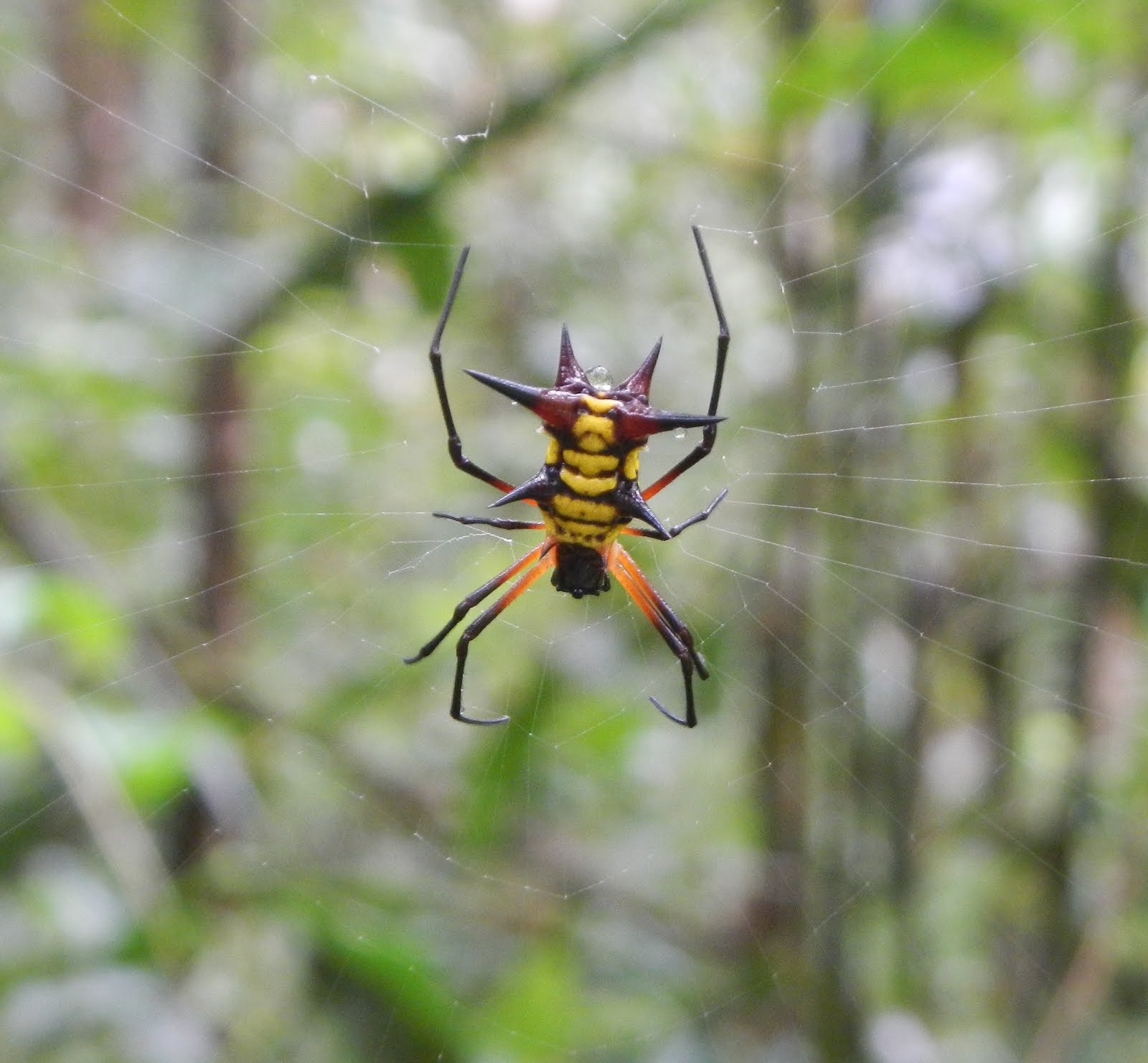
Bull Horned Spider
            
The last full day we had a completely free day and a few friends and I hiked a 12km trail around the park and saw and smelled peccaries, which are basically big black pigs, turtles, pakas (big rodents), and blue morpho butterflies, just to name a few.  We also floated down the river and played an intense game of soccer with the staff.  I cannot believe two went by so quickly.  It was an amazing experience where I saw 10 different species of monkeys, trees with huge buttresses/roots, thousands of different species of birds, flowers, and plants, and learned a ton. As I was leaving the forest, I realized I could actually identify a large amount of what is in the forest.  While I was sad to leave the rainforest, I am excited about all of our upcoming exciting adventures. 


Wooly Monkey
            

Monday, February 15, 2016

Bugs, humidity, and oceans galore in the Bosque Seco

Another wonderful week in Ecuador, I finished my Spanish class, went to zumba with my host mom, and went off to the coast of Ecuador for five days. 

The beginning of the week started off hectic because we had a lot of homework assignments due for biology class and our Spanish classes ended on Wednesday! For the first two days of the week we were the only ones at the university because everyone else had a break for Carnaval. I can’t complain too much because on Tuesday in our Spanish class we learned how to salsa dance, listened to Ecuadorean music, and learned about the history of Carnaval. Unlike what most people think Carnival actually started in Egypt and Sumer and only spread to Latin America through the Conquistadores. After giving a presentation about lacrosse in Spanish on Wednesday, Spanish was officially over, and definitely the shortest class I have ever taken! In biology this week we learned how to use Geographic Information Systems (GIS), which is essentially a way of collaborating data and organizing it geographically to make a map. 

This week I also went to zumba with my host mom in the park in my neighborhood! There were about 15 other women from the neighborhood and myself.  For the first half I was doing fine in the class, but in the second half the hips came out, and for as much as I tried I just could not move my hips the same way at the other women! It was a great bonding experience with my host mom!


Then on Thursday I left for the coast of Ecuador and to the Bosque Seco or dry forest.  We went to the Lalo Loor Dry Forest Reserve, which is run by the Ceiba Foundation and is located n the Pacific coastal province of Manabí, Ecuador. It lies in a transition zone between the very wet forests to the north and the very dry forests further south. It is about a seven-hour drive from Quito but we also stopped multiple times along the way! The Lalo Loor Dry Forest Reserve protects 200 hectares (around 500 acres) of forest, which is extremely important in this region, as 98% of dry forests in Ecuador have been deforested for agriculture and other land use.

Howler Monkeys

Dry forests are more similar to the forests that we are used to in the United States because there is seasonality to them.  There is a wet and dry season and in the dry seasons the trees are deciduous and drop their leaves. These forests have been the victims of deforestation mainly because their soil is nutrient rich and is extremely fertile.  Deforestation has extreme effects on the land as it causes the loss of soil fertility, soil compaction, reduced water quality, and more carbon being released into the atmosphere. Additionally, the forests are being replaced by pastures, which the worst environmental impact on the land. 

The minute we stepped off the bus, it was clear we were no longer in Quito.  The temperature had risen by around 20 degrees and it was extremely humid and buggy.  For the next three nights we stayed at a cabin in the Lalo Loor Reserve.  We went on hikes to look at all the different types of plants and landscape there and we were extremely lucky because a family of Howler monkeys also decided to camp out right where were we were sleeping.  After the first morning it was clear why they are called howler monkeys because by 7 am they were screaming back and forth to one another.  While we were there we also went bug hunting to compare the different bugs in forested areas, pastures, and reforested areas.  We all ran around trying to capture bugs with our hands, nets, or through a vacuum!

Bug Hunt
Pig next to the river

We also went to nearby towns to test the water quality of their rivers.  This is something I am going to do again as a part of my internship at the end of the semester.  We went to a river located 20 minutes away and while we were there in the river we saw people swimming, doing laundry, and some animals.  We tested the river for different criteria and perhaps the most shocking was the extremely high level of E. coli we found in the river. In the United States no lake should ever exceed 1,000 E. coli cells per 100 mL of water, in the river we tested we found 1700 E. coli cells per 100 mL of water.  During my internship in April I am going to continue testing the rivers and also help educate the locals about the importance of not drinking or bathing in the river as it can make them extremely sick. We are also trying to teach them not to let their animals be near the river as that is how the E. coli arises in the first place. 

Tree Planting
Camping out on the beach


On Sunday morning we went to a nearby agroforestry farm where the landowner has converted part of his land to agriculture, while continuing to plant trees and other natural vegetation.  While there we sampled his delicious coffee and cocoa and even planted trees!  In the afternoon we all got to enjoy the rest of our Valentines Day with a nice relaxing afternoon in the ocean. I was definitely 'kissed by the sun' for my Valentines Day. We camped out on the beach and swam in the Pacific Ocean where the waves were gigantic! We then played a very intense game of ultimate Frisbee on the beach.  At night we had a bonfire and went to sleep to the sound of the ocean and beautiful night sky. 

Now, I am back in Cumbaya with just enough time to do some laundry and take a test on Wednesday. On Friday we head out to the Amazon for the next two weeks!


I am very excited for this upcoming week and I will definitely write all about my experiences in the Amazon when I return.